
Radiolabeled 35S Cold Chromium Distillation Equipment
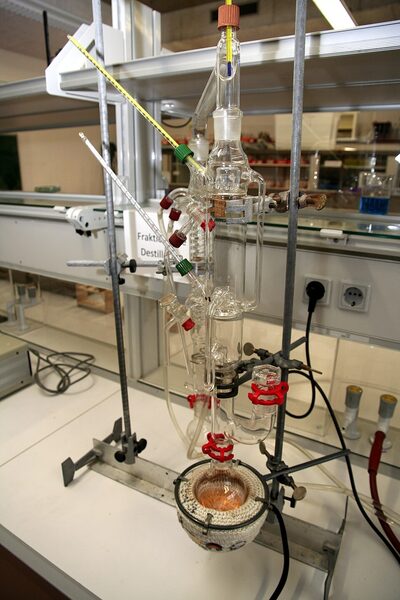
Recovery of reduced sulfur for ³⁵S sulfate reduction rate studies.
Cold chromium distillation is the established method for measuring microbial sulfate reduction rates. Samples incubated with 35S-labeled sulfate are treated with acidic chromium(II) chloride, which releases the reduced sulfur produced during the incubation as hydrogen sulfide.
The released sulfide is carried by nitrogen gas into a zinc acetate trap and then counted on our liquid scintillation counter. Comparing the reduced sulfur with the remaining labeled sulfate gives the sulfate reduction rate.
Applications
- Sulfate reduction rates in sediments, soils and wetlands
- Studies of sulfur cycling in aquatic and industrial systems
- Evaluation of souring and corrosion-related microbial activity
- Research on sulfate-reducing microbial communities
Typical Sample Types
Sediment cores, slurries and incubations containing 35S-labeled sulfate. Please contact us to plan incubations before sampling.
Key Specifications
| Method | Cold chromium(II) distillation |
|---|---|
| Recovered fraction | Total reduced inorganic sulfur (sulfide, FeS, pyrite, S0) |
| Trap | Zinc acetate sulfide traps |
| Detection | Liquid scintillation counting |
Specifications are provided for general reference. Method performance depends on sample matrix and project requirements.
To discuss a project that uses the Radiolabeled 35S Cold Chromium Distillation Equipment, please call (314) 918-5494 or submit a project quote request.
Related News
- Radioisotope analysis capability expanded – September 18, 2018